Legend has it if you are trying to keep your family intact, don’t play Uno together. There is no legend, but the card game is notorious for causing arguments between friends and families who play. There are rules including in the box, but there are also many “house” rules. When I play, we have to make a decision at the top about what rules we are going to use, lest we all have to target that one person who insists on stacking Draw cards.
Back in 2019 UNO came and to Tweet a clarification of the rules:
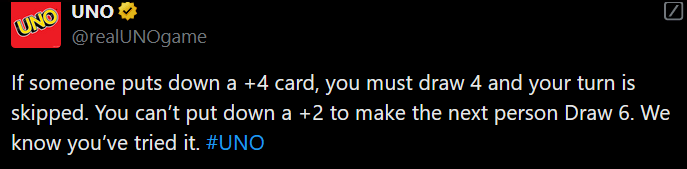
Instead of relief that they finally knew the truth, the collective of players on the internet told UNO, respectfully, it was wrong about its own game. This is a great example for us to consider product usage.
UNO is a card game, designed with a particular set of rules. However, once that pack gets into the hands of consumers, they decide how they actually want to play. The same is true for any product you produce. No matter how you might design things, people will use it for the purposes and the ways they see fit. It is then your job to figure out what they are really doing with your product and how that might inform your designs or educational materials moving forward.
We are in a time rich with people’s unfiltered opinions about all of the products they use. Of course, there still reviews written on retailer sites, but we also have access to social media. From Day in the Life videos to Get Ready with Mes to pure ranting, people are showing how they use all of the products they buy. Use that to your advantage to switch up your strategy. But maybe don’t just flat out tell them their wrong. (Because I will continue to play UNO as I see fit.)
If you want to read more content like this, here are some more you might like:
And here are my most recent posts:
 A Wren Says
Leave a comment