While you’ve been doing your online shopping, you’ve likely come across FitFinder, suggested by the site to help you find your best fit. It’s a product developed by the company FitAnalytics and is now available on multiple brand sites. As a shopper, it is helpful to have a tool to figure out sight unseen what product might work best for me. But for brands, it is event more valuable because it helps to reduce the dreaded returns problem by helping you more easily find the right product from the start.
Here is what it looked like when I tried using it on a recent online window shopping session.
When I opened the Adidas site, I noticed for the first time they said it was to help reduce returns. But more importantly, it provided other shoe brands as options for me to choose from. I then inputted the size that worked best for me with them and got a suggestion for what I should order in Adidas. I then moved on to the Theory site to play with how it might work with clothing.

I had recently been in store at Theory and decided to test the tool’s accuracy against my real world experience. I chose a pair of pants I tried on (and am secretly hoping will one day go on sale while in stock in my size). This time the tool got more specific asking for height and weight.

Interestingly enough it asked for age. But apparently, it was not just to get more data from me but because they’ve run statistics and noticed that weight distribution changes with age. Other questions included belly shape and hip proportions. At the end, I was surprised to see the tool suggested the same size pants I had preferred in store.
And then I started playing around with the proportions to see what they would suggest for different body types and weights.

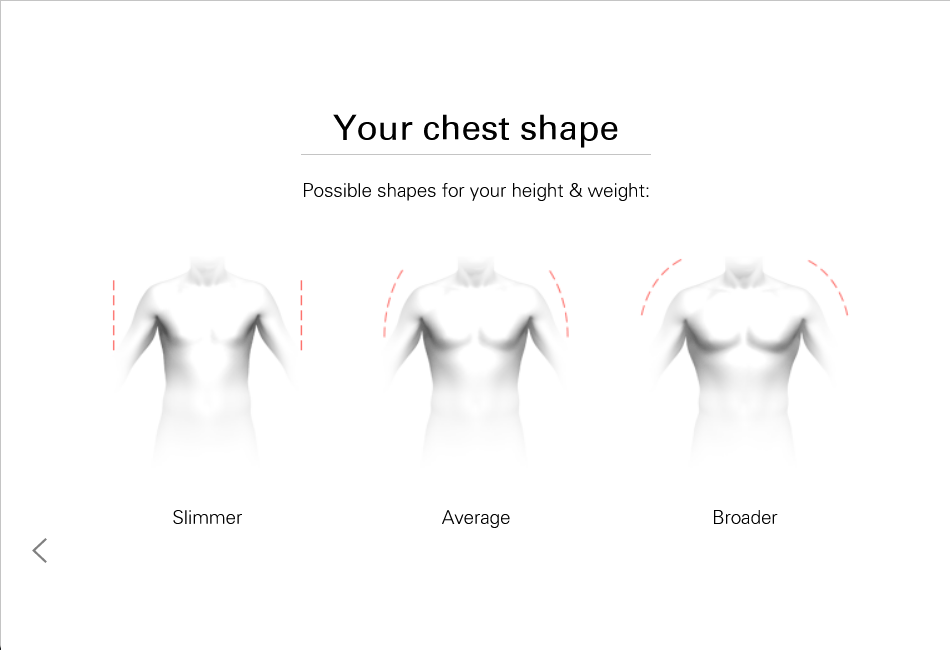
And finally, I decided to see how the tool might work for me in the men’s section What they would recommend as a blazer size for me? Going through a similar process as before, but this time adding in information about chest shape/shoulder width, I found the suggestion seemed fairly accurate based on the size chart and what I know of my measurements.
Tools like FitFinder certainly help me, and other shoppers, get more information about products to make a more informed decision. The only issue is that it is not a perfect tool. While it will reduce returns for wrong fit, it won’t completely eliminate them. Even if the size is right on paper, differences in torso length, arm size, thigh circumference, and general body perceptions can still make finding the right fit a struggle. Additionally, the tool is powered by machine learning algorithms. So, if they don’t have enough reliable information, you are not as likely to get an accurate suggestion.
Services like FitFinder is a great step, but brands still want to go even further to get you the right fit without ever touching the product. And I’ll have more on that for in an upcoming post.
As a quick preview, the next level is AI mixed with a little tech you might recognize from gaming.
If you want to read more content like this, here are some more you might like:
And here are my most recent posts:
 A Wren Says
Leave a comment