Take a moment. Think about Africa.
What came to mind?
Did you think about the landscape? Maybe the Sahara or the Serengeti first popped up. Or perhaps You thought you thought of historical events, maybe the pyramids. Or maybe Afrobeats music. Quick question, was the first thing you thought of poverty? War? Corruption?
Look, no judgement. It would be hard not to think of that given much of the media we’ve received over the years about the continent has highlighted its problems. I know growing up, I was much more likely to see a Save the Children ad or images of people fleeing rather than coverage of scientific breakthroughs or successful business ventures. Chalk it up to the nature of news media, but it is very easy to see the continent as one dimensional and focus on its problems more so than its beauty. Next question, what comes to mind when you think about African fashion?
If you know a Nigerian woman who dons traditional formal wear, you might see her wear an intricately sculpted headwrap made with a stiff fabric and then pinned into place by a skilled stylist.
Perhaps you know someone from Ethiopia who wears clothing made from lightweight white fabric.
Or maybe you think of waist beads, jewelry, bright colors. Quite possibly you thought of kente cloth and daishikis.
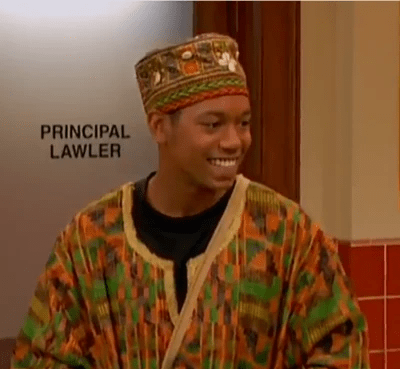
Just like the image we might have of the continent overall, I believe a western view of African fashion can be limited to quick media portrayals. Take even children’s shows. When That’s So Raven depicted an African character, they chose the common motifs to visibly represent the foreign exchange student as an African. (If you see the episode now, let’s not even get into the accent.)
It’s just less work to reduce an entire continent down to a few items and not consider vastness of tastes and choices in its fashion landscape. But just like it is foolish to reduce Africa to the sum of its problems, it is equally foolish to reduce African fashion to its most commonly exported motifs.
I am reflecting on this because of a remark Thebe Magugu made in one of his interviews. He remembered a woman telling him essentially that his designs were not African enough. The response, in my opinion, is then, “Well, what is African fashion?”
If I were to guess the thoughts of the person who was disappointed in the lack of African-ness in Magugu’s designs, I assume she was disappointed not see anything to add to a blatantly Afrocentric wardrobe. There are few stereotypes in his work. Essentially, she could have said, “I have a box of what I think is sufficiently African in a box. Could you kindly go back into it and give me more of what I think I want? Thank you.”
Then what is African fashion? I guess it would be pretty simple to say that it is what African people wear and design now. It takes into account the history of clothing throughout the continent, that is pre-colonization, and the ways it evolved after European invasion and continues to evolve with globalization. It is the choices people make now, how they choose to dress, and what they express through clothes. In light of my study of Magugu, African fashion is a way of telling Africans’ stories, their complicated human experiences, through whatever means Africans choose.
I reflected on this after doing my research to write of the brand spotlight on Thebe Magugu, but it appears I am not alone in my musing. Here are some more articles talking about this topic you might enjoy reading:
- Elizabeth Grenier, writing for DW: Innovative designers challenge African fashion stereotypes
- Hannah Azieb Pool for The Guardian: Why the term ‘African fashion’ is reductive
If you like this type of content, here are some others from me you might like:
These are a few of my most recent posts:
 A Wren Says
Leave a comment