“In every single collection, I try to speak to a wide audience and try to make everyone understand my message, my concept. So, my aim is to be understood by a lot of people in a special way. It is essential to be understood by the target I want to reach.”
Simon Porte Jacquemus, as quoted in The Front Row Edit
Yesterday, I wrote more extensively about Simon Porte Jacquemus himself. Today, my focus is on the brand. What is Jacquemus?
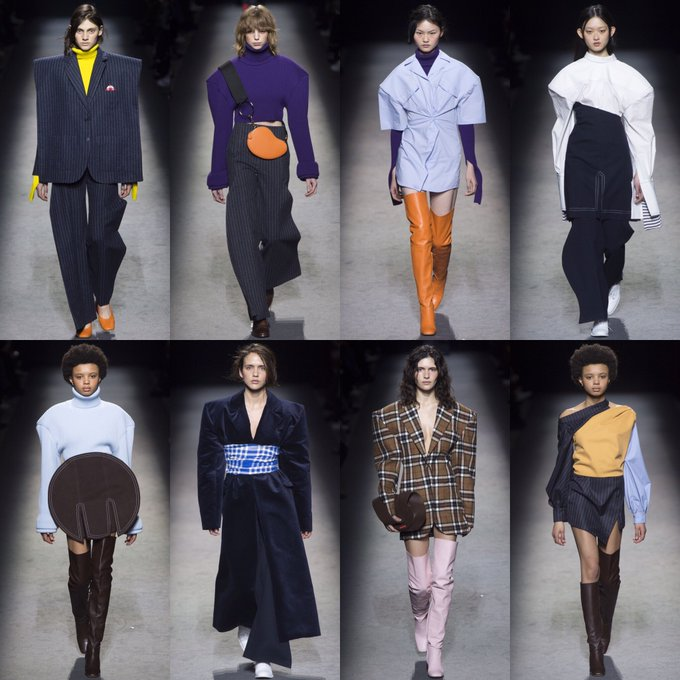
In the beginning the womenswear silhouette was oversized stiff and deconstructed. Much of his inspiration was drawn from Comme des Garcons. A shift happened when he saw a photograph of his own mother. She was dressed wearing a wrap skirt and ceramic earrings, with her hair hidden away in a headwrap. She was beautiful. She became his muse of sorts, a Mediterranean woman, La Bomba. Now the designs featured more skin, tighter lines, and asymmetry. Jacquemus continues to evolve how he designs for women. As he learns more about her shape and the ways fabric drapes on the women’s bodies. As what is considered sexy and sophisticated shifts, so too does his design.
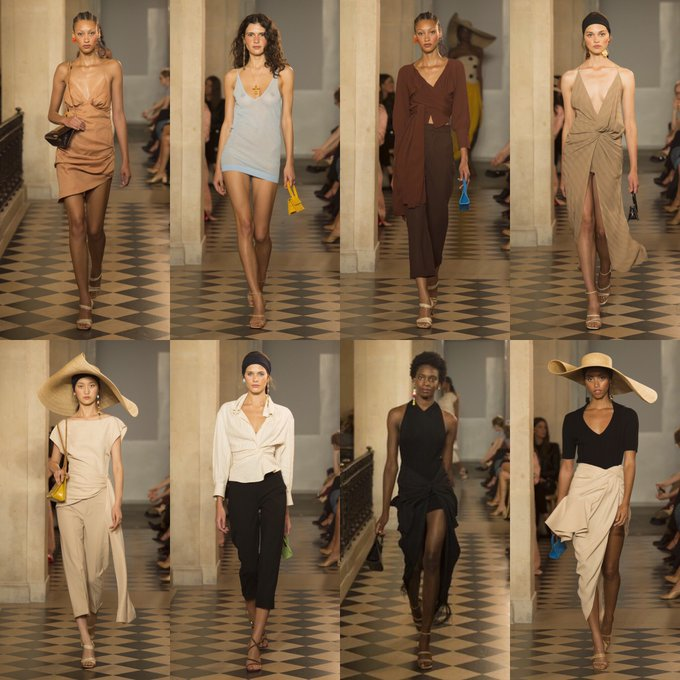
After a sole focus on womenswear, the menswear collection debuted in 2018. Simon credited falling in love as the push to help him explore designing for men. His partner provided him the energy to begin telling stories for and about men.
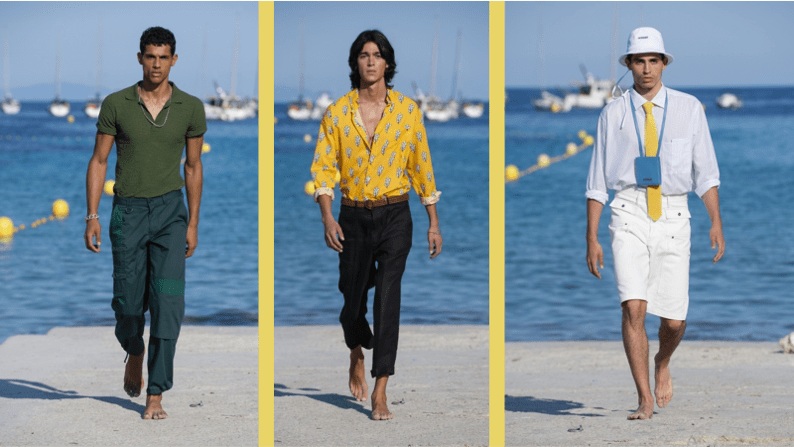
The man is Le Gadjo. Le Gadjo is a local term for a tourist. He is masculine and sporty. As Jacquemus designs for men, he considers details and wearability. A key test is whether he himself would wear what he designs.
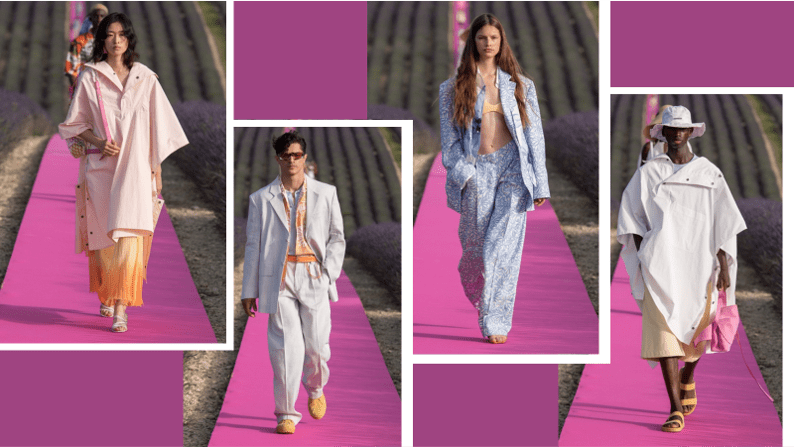
The brand remains a relatively small operation, with much of the work done in house. This includes clearing the lavender fields in Provence for their 2019 show “Le Coup de Soleil.” However, how he designs and who he designs for continues to evolve.
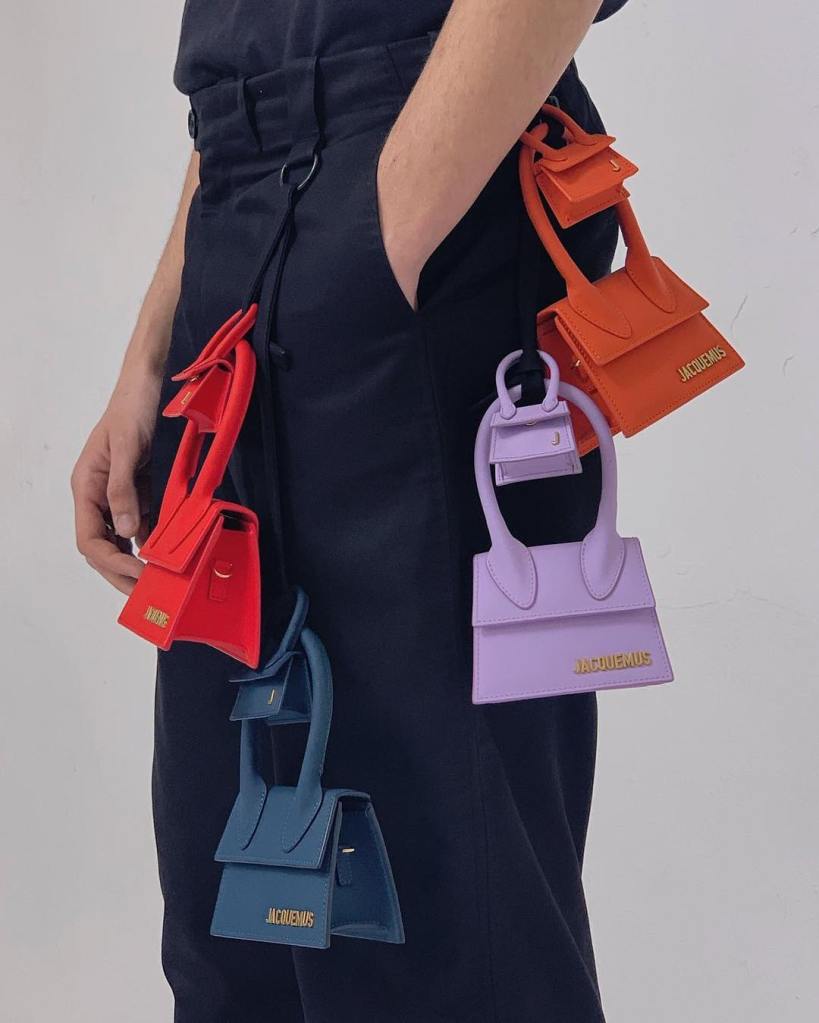
When he went to Paris, Simon remarked “the Parisian woman didn’t seem to enjoy herself much.” He has “no interests in people who don’t have a smile.” This lightheartedness can be seen in the iconic designs that have gone viral. This includes the bag, Le Chiquito. Impractically small, many advised him it would never sell. But with an eye for vitality and potential popularity, he saw that to be the very reason for its likely success. He continues to confirmed as right with the continued sales for the mini chiquito, a bag so tiny it has spawned memes galore.
The originality of his designs has intrigued copycats, especially those in fast fashion. Rather than getting upset, he remains level headed. This is a form of flattery that extends the message of the brand to a wider audience. His designs provide inspiration to a completely different consumer group who may not be able to access his brand. As he said in an interview with The Front Row Edit, “I don’t know if everyone can buy my clothes, but I want to make them part of my mood, of my world.”
Sources:
Barnard, C. (2017, March 14). Simon Porte Jacquemus on his namesake label and the importance of spontaneity. Paper Mag. https://www.papermag.com/simon-porte-jacquemus-on-his-namesake-label-and-the-importance-of-spon-2314249230.html
Business of Fashion. (n.d). Simon Porte Jacquemus. https://www.businessoffashion.com/community/people/simon-porte-jacquemus
Jacquemus. (n.d.). Simon. https://www.jacquemus.com/simon
Tewson, C. (2018, Nov. 27). FIVE MINUTES WITH… SIMON PORTE JACQUEMUS. Front Row Edit. https://frontrowedit.co.uk/five-minutes-with-simon-porte-jacquemus/
Zahm, Olivier. (2016). Simon Porte Jacquemus. Purple Magazine. S/S 2016 issue 25. https://purple.fr/magazine/ss-2016-issue-25/simon-porte-jacquemus/
 A Wren Says
Leave a comment